

Group photo of participating experts
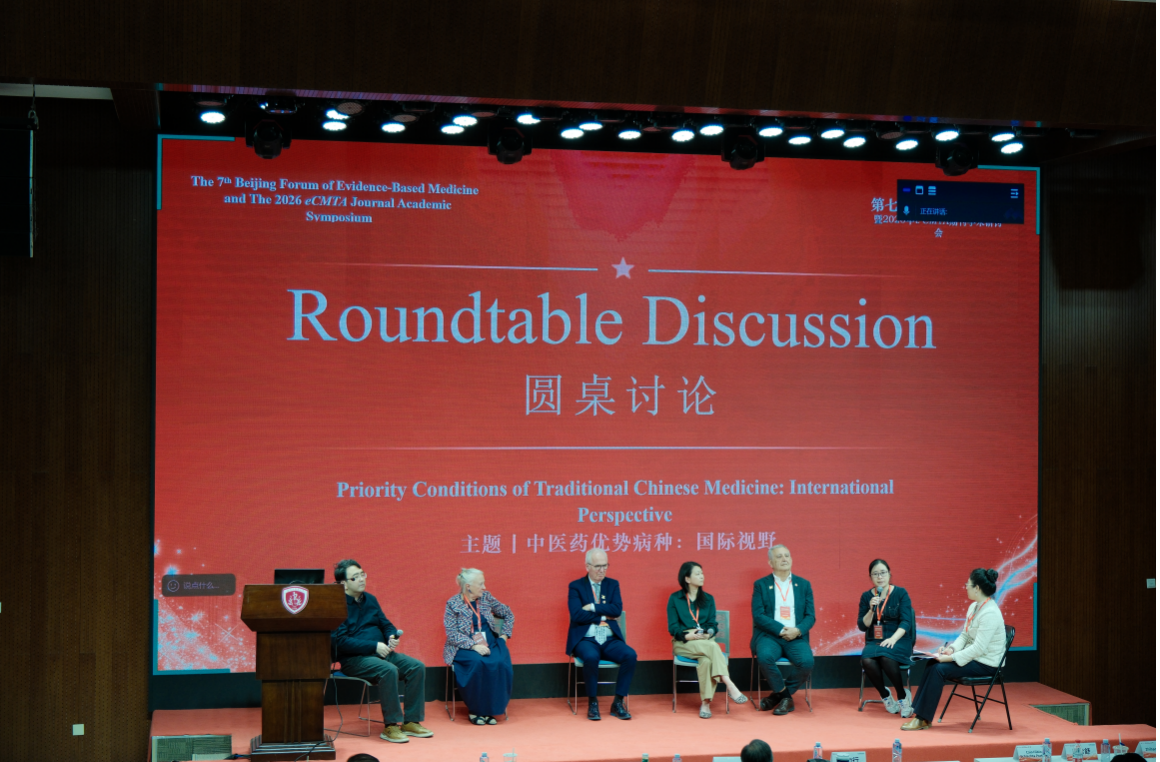
Roundtable discussion
eCMTA Journal Academic Symposium

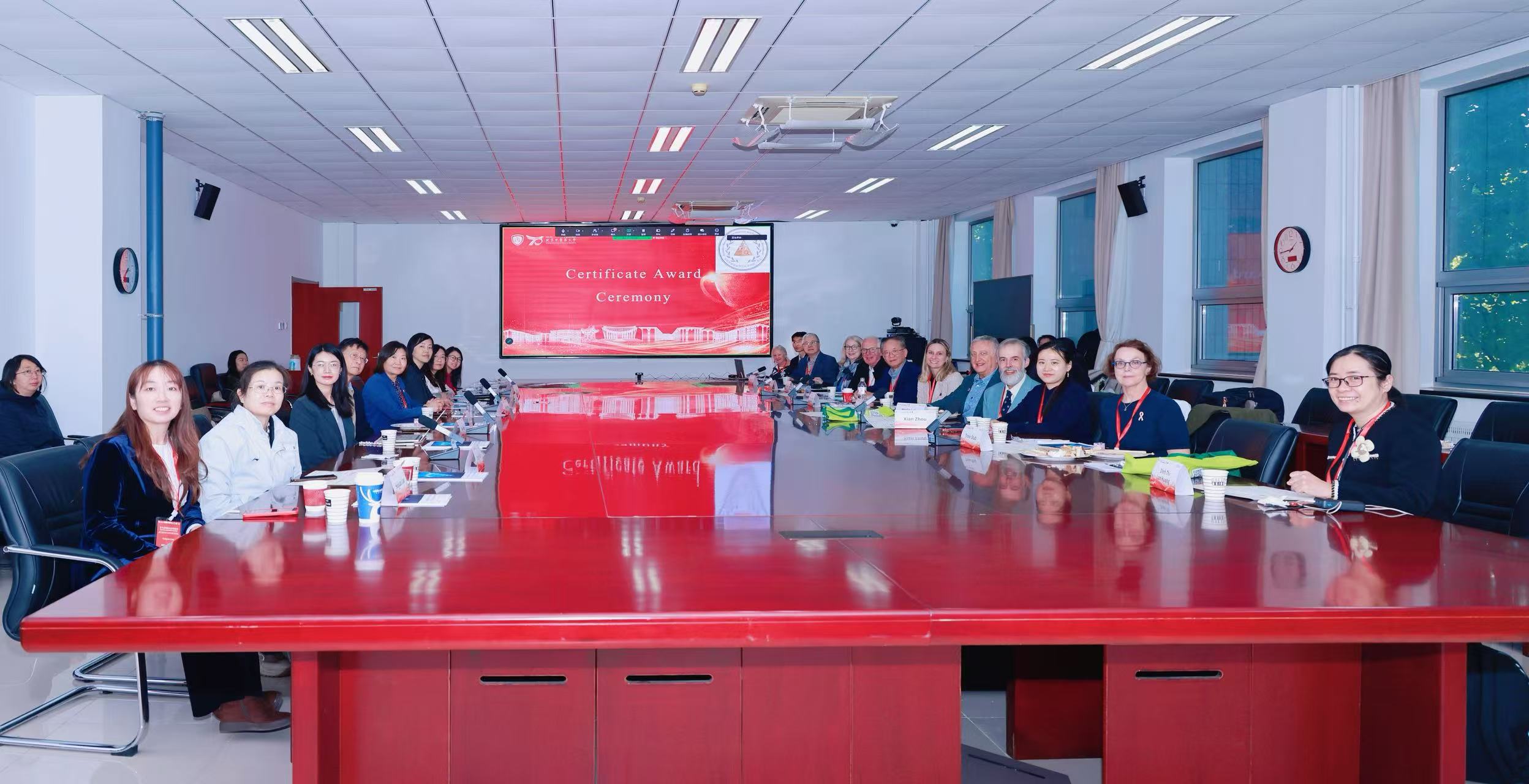
Group photo after the letter of appointment presentation ceremony
GA, UNITED STATES, October 28, 2026 /EINPresswire.com/ -- From October 19 to 20, the Seventh Beijing Forum on Evidence-Based Medicine and the 2026 eCMTA Journal Academic Symposium were held at Beijing University of Chinese Medicine (BUCM). Twenty-eight experts from 14 countries and
regions, including the Chinese mainland, Hong Kong, Macao and Taiwan, Canada, the UK, the US, Australia and Norway, discussed evidence-based medicine, traditional Chinese medicine (TCM) clinical research, artificial intelligence and international cooperation in traditional medicine, exploring how reliable evidence can support high-quality TCM development and serve clinical practice and public health.The forum was co-hosted by BUCM's Center for Evidence-Based Chinese Medicine and the Journal Center, with co-organization by BUCM's International Evidence-Based Chinese Medicine Research Institute and other institutions. Professors Liu Jianping and Fei Yutong chaired it. BUCM Vice President Liu Cunzhi and Journal Center Director Pan Yanshu delivered opening remarks. Coinciding with BUCM's 70th anniversary, Vice President Liu said BUCM has long promoted TCM–evidence-based medicine integration and hoped the forum would strengthen international exchange and resource sharing. Participants included Gordon Guyatt, a founder of evidence-based medicine, a Fellow of the Royal Society of Canada and professor at McMaster University; Nicola Robinson of London South Bank University; Lao Lixing, President of Virginia University of Integrative Medicine; and Dennis Chang and Alan Bensoussan of Western Sydney University. The program featured keynotes, a young scholars' session and international roundtables on evidence evaluation, TCM clinical research methods and international cooperation.
Evidence-based medicine emphasizes combining clinical experience, reliable research evidence and patients' needs and preferences. In his keynote, Gordon Guyatt noted that evidence varies in reliability; high-quality decisions require scientific appraisal and systematic summaries of evidence while considering patients' values and preferences, and can help patients understand expected benefits and risks. Nicola Robinson discussed "What Counts as Evidence?", stressing that trust requires rigorous research into real effects and risks, not just individual success stories or personal impressions. Evaluating TCM's efficacy and safety and translating findings into usable evidence remain key challenges. Lao Lixing discussed methodology and challenges in Chinese herbal medicine trials; Dennis Chang reviewed global trends in evidence-based integrative medicine; Terje Alræk shared research on acupuncture for cancer-related fatigue in breast cancer patients.
Roundtables on TCM priority conditions and international cooperation in traditional medicine were chaired by Fei Yutong, Vice Dean of BUCM's School of Chinese Medicine, and Cao Huijuan of the Center for Evidence-Based Chinese Medicine. Experts shared views on clinical advantages, research collaboration and application. A young scholars' session let early-career researchers present work on TCM clinical research, evidence evaluation, acupuncture efficacy and guideline development, with comments from Liu Jianping and international experts. The Center has long supported efficacy evaluation, research methods, guidelines and international cooperation. The forum also addressed artificial intelligence and translation of evidence into clinical practice guidelines. Pan Yanshu said evidence-based medicine is not tradition versus modernity but a way to test traditional medicine's clinical value through modern science; she expected eCMTA to gather high-quality evidence and promote international dissemination of TCM research.
On the afternoon of October 20, the eCMTA Journal Academic Symposium brought together Tsinghua University Press representatives and Chinese and international editorial board members online and offline. Liu Jianping welcomed participants; Pan Yanshu affirmed eCMTA's progress in internationalization, database indexing and academic influence and pledged continued support. Letters of appointment were presented, and Nicola Robinson reported on the journal's development. Board members discussed special topics for Volumes 3(2) and 4, column adjustments, board responsibilities, young editorial members and international influence.
The forum provided a platform for exchange and cooperation among medical experts at home and abroad and created opportunities for further integrating TCM clinical research with international evidence-based medicine methods. By continuing to strengthen high-quality clinical research, promote the translation and application of scientific evidence and deepen international academic cooperation, it is expected that the clinical value of TCM will be more scientifically understood, providing greater support for improving healthcare quality and public health. Authors are welcome to submit manuscripts at https://mc03.manuscriptcentral.com/ecmta; for any questions, please contact us by email at ecmta@buem.edu.cn. Until December 31, 2027, the journal will waive article processing charges (APC); outstanding manuscripts will receive appropriate rewards.
Original Source URL
https://www.sciopen.com/journal/3078-7963
Lucy Wang
BioDesign Research

No comments:
Post a Comment