
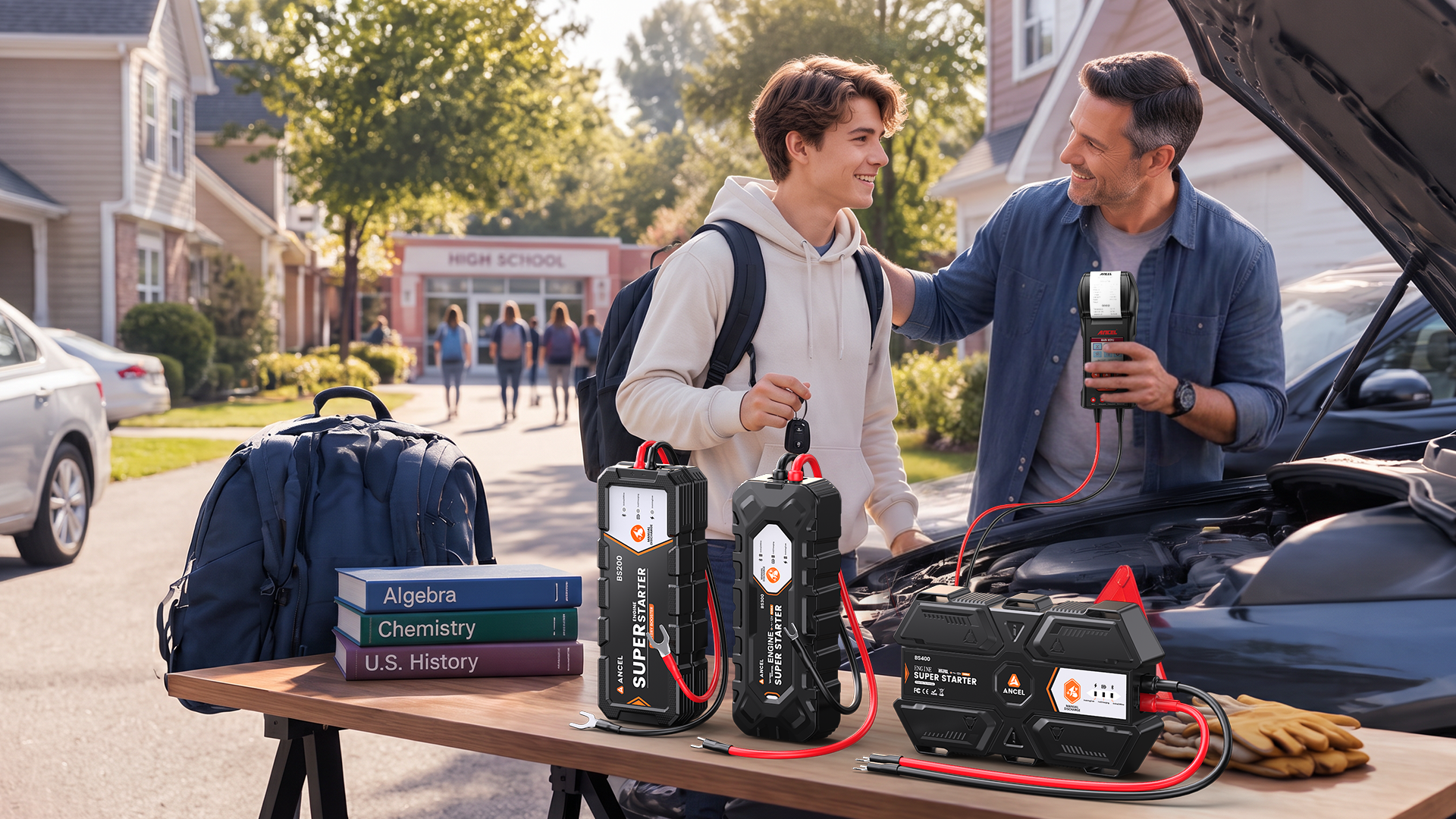
ANCEL Encourages Families to Prepare Teen Drivers’ Vehicles Before the New School Year
As the back-to-school season begins, ANCEL recommends a pre-school vehicle check, including OBD2 diagnostics, battery testing and emergency preparation.
MARIETTA, GA, UNITED STATES, July 25, 2026 /EINPresswire.com/ -- For millions of families, the "Back-to-School" season marks a major milestone: teenagers driving independently to school, part-time jobs, and college campuses. According to the American
Automobile Association (AAA), flat tires, dead batteries, and non-starting vehicles are among the most common reasons drivers request roadside assistance. For students who are just beginning to drive independently, these unexpected situations can be especially challenging to handle alone.As a global provider of automotive diagnostics and battery protection technology, ANCEL is calling on parents to perform a comprehensive vehicle inspection before handing over the car keys.
"Battery health is often overlooked until a car fails to start," said an ANCEL spokesperson. "A quick 10-minute check before the semester starts can spot battery degradation or fault codes weeks in advance, making the difference between a smooth morning and a desperate call for help."
Why Back-to-School Is High-Risk for New Drivers
- Increased driving frequency. Vehicles that were only occasionally used during summer may suddenly become daily transportation for school, sports, or part-time jobs. Frequent starts can quickly reveal battery or charging system problems.
- Unrecognized warning signs. Slow engine starts, dashboard warning lights, or diagnostic trouble codes may not seem serious to inexperienced drivers, causing them to continue driving until a vehicle fails to start.
- Pre-owned or handed-down vehicles. Many teenagers drive family vehicles or older used cars, which are more likely to experience battery aging or hidden diagnostic issues.
- More independent driving. Driving solo means parents aren't nearby when unexpected breakdowns happen.
For many teenagers, the back-to-school season may be their first experience managing vehicle issues without immediate parental support.
ANCEL Advocates Back-to-School Vehicle Prep for Families
1. Scan for Hidden Codes with ANCEL OBD2 Scanners
Vehicles often record early warning codes—such as sensor issues or loose gas caps—long before a check engine light appears.
ANCEL OBD2 scanners read and translate these codes in seconds, helping families understand check engine light issues before they become major repairs.
2.Test Battery Health with ANCEL Battery Testers
A battery may seem fine until cold weather or heavy draw causes an unexpected failure.
The ANCEL battery testers help drivers quickly evaluate battery condition, including voltage, starting performance, and overall battery health.
For example, the ANCEL BST600 Battery Tester provides test results within 2.5 seconds, helping users determine whether a battery requires further maintenance or replacement.
3.Install the ANCEL BS Super Starter for Continuous Starting Protection
For students commuting long distances, ANCEL recommends installing the BS Series Super Starter, including BS200, BS300, and BS400 super capacitor starter.
Even well-maintained batteries can fail due to aging, extreme temperatures, or accidentally leaving lights on.
Unlike traditional portable jump starters, the ANCEL super starters (BS200, BS300, and BS400) use supercapacitor technology to provide long-lasting starting support without daily charging requirements and with minimal maintenance. Working together with the vehicle’s existing battery, the system absorbs peak starting loads during each engine start, helping reduce the daily stress that contributes to battery wear.
Even if the primary battery is severely drained, the ANCEL BS supercapacitor jump starter leverages residual power to start the engine automatically—helping eliminate situations where parents need to drive across town with jumper cables to provide assistance.
4.Check Tires and Prepare an Emergency Kit
Verify tire pressure and spare tire condition. Keep an emergency kit inside the trunk containing a tire gauge, reflective triangles, flashlight, portable air pump, and basic tools.
5. Save Roadside Contacts
Parents should save important roadside assistance contacts in their teen driver’s phone or vehicle emergency information card.
- AAA Roadside Assistance (U.S.): 1-800-AAA-HELP (1-800-222-4357)
- Auto insurance or manufacturer roadside assistance: Save the contact information provided by your insurance company or vehicle manufacturer.
- Emergency Assistance: Remind young drivers to call 911 if stranded in active traffic.
Confidence Starts Before the Journey
At ANCEL, vehicle safety preparation should begin before warning lights appear or roadside problems occur.
By combining routine maintenance, convenient diagnostic tools, and reliable starting solutions, families can reduce unnecessary vehicle problems. A well-prepared vehicle empowers both students and parents with confidence on every trip.
This commitment is why ANCEL continues investing in automotive diagnostic and battery protection technologies.

No comments:
Post a Comment